📋 Table of Contents
How the Iran Conflict is Pushing Up GFRP Rebar Prices in India
Many buyers assume that because fibreglass is manufactured in India, GFRP rebar prices are insulated from global events.
That assumption is only half correct.
Yes — fibreglass roving is produced in India by manufacturers like Owens Corning, CPIC, and others. But the raw materials used to make fibreglass are largely imported. And the energy used to melt and form glass fibre — primarily LPG — is a globally traded commodity with prices linked to Middle East supply chains.
The ongoing conflict involving Iran is hitting GFRP manufacturers on multiple fronts simultaneously. Here is the full picture.
How Fibreglass Is Actually Made — And Why It Depends on Imports
Fibreglass roving is made by melting a precise blend of minerals — primarily silica sand, limestone, kaolin clay, and boron compounds — at extremely high temperatures (around 1,400°C) and drawing the molten glass into fine continuous filaments.
Here is where the import dependency comes in:
1. Boron compounds (borax and boric acid) Boron is a critical ingredient in E-glass fibre — the standard grade used in GFRP rebar. India has very limited domestic boron reserves. The majority is imported from Turkey and Central Asia — regions whose supply chains and shipping routes pass through or near the conflict zone.
2. Silane coupling agents and sizing chemicals The surface coating applied to fibreglass strands (called sizing) uses specialty chemicals — including silane coupling agents — that are largely imported from China, Germany, and the USA. Global freight disruptions caused by Middle East tensions have raised costs and extended lead times for these inputs.
3. Specialty minerals and additives Certain glass formulations use additional imported mineral additives to achieve specific mechanical or chemical resistance properties. Supply chain disruptions affect these too.
So while the fibreglass roving arrives at a GFRP manufacturer as an Indian product — the inputs that went into making it are globally sourced and globally priced.
LPG: The Hidden Cost Driver
Fibreglass manufacturing is an extremely energy-intensive process. The furnaces that melt glass operate continuously at 1,400°C+ and cannot be easily turned off or scaled back.
The primary fuel used in fibreglass furnaces in India is LPG (liquefied petroleum gas).
LPG pricing in India is directly linked to international propane and butane prices — which are in turn driven by Middle East production and export dynamics. Iran is one of the world's largest LPG producers. Conflict-related supply uncertainty has pushed LPG prices higher globally.
Higher LPG cost = higher fibreglass production cost = higher roving price for GFRP manufacturers.
This is a cost that is invisible to buyers but very visible to manufacturers.
Epoxy Resin — Crude Oil Linkage
Epoxy resin is the polymer binder in GFRP rebar. It is a petrochemical product derived from bisphenol-A (BPA) and epichlorohydrin — both of which are produced from crude oil and chemical intermediates.
Crude oil price volatility caused by the Iran conflict has fed directly into: - Higher feedstock costs for epoxy producers - Reduced supply availability from some regional producers - Price increases being passed to downstream users including GFRP manufacturers
Hardener — The Sharpest Price Spike
Hardener (curing agent) is the chemical that activates and cures the epoxy resin during the pultrusion process. Without it, no GFRP rebar can be manufactured.
Hardener is produced from specialty chemical intermediates with a concentrated global supply base. Key precursors and grades are sourced from Middle Eastern and Asian suppliers — supply chains that have been directly disrupted by the conflict.
The result: hardener prices have increased by up to 100% for some grades. This is not a marginal fluctuation — it is a doubling of cost on one of GFRP's essential inputs.
The Combined Impact on GFRP Rebar Pricing
To summarise, GFRP rebar manufacturers in India are currently absorbing cost increases across:
| Input | Price Impact |
|---|---|
| Fibreglass roving | Increased (boron imports, LPG cost) |
| LPG (furnace fuel) | Increased (Middle East supply link) |
| Epoxy resin | Increased (crude oil linkage) |
| Hardener | Increased up to 100% |
| Freight and insurance | Increased (longer shipping routes) |
All of these hit simultaneously. This is why GFRP rebar prices have moved upward in recent months and why quotes you receive today may differ from quotes received six months ago.
Prices mentioned in this article are for context only. Actual GFRP rebar pricing depends on current market conditions, diameter, and order quantity. Contact RN Elements for current and accurate pricing.
Does This Make GFRP Uncompetitive With Steel?
No — and here is why.
Steel prices are equally exposed to global commodity markets. Iron ore, coking coal, and energy costs all fluctuate with global events. Steel has seen its own price cycles driven by China demand, coal supply, and freight costs.
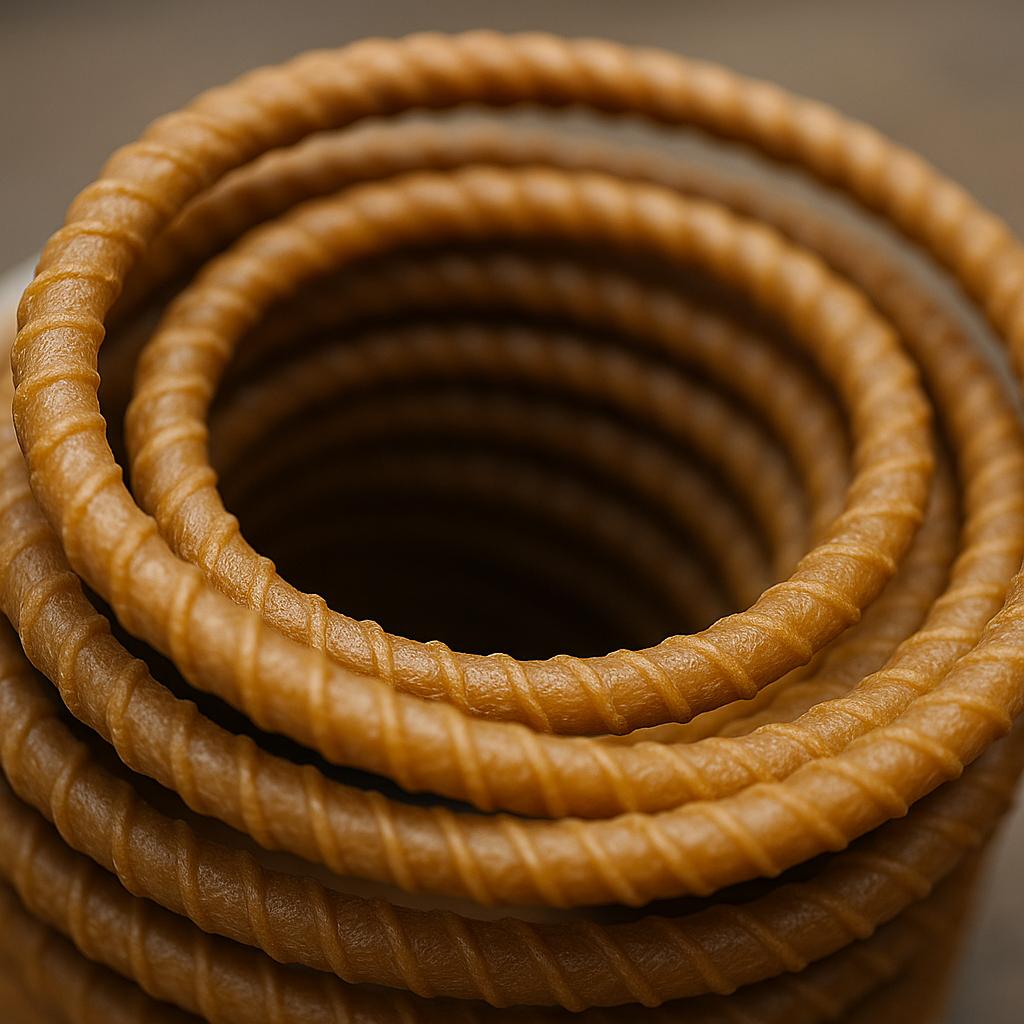
More importantly: on a per-metre basis, GFRP rebar from RN Elements remains cheaper than steel — even factoring in current raw material pressures. The 3.8x weight advantage means you need significantly less material by weight, which offsets the higher per-kg price.
And the lifecycle advantage — zero corrosion, zero maintenance for 50+ years — is completely unaffected by raw material price cycles.
What Buyers Should Do Now
1. Engage early for upcoming projects Raw material prices are volatile. If you have a project in the next 3–6 months, engage with us now to understand current pricing and plan accordingly.
2. Consider supply agreements For large or long-duration projects, a supply agreement with RN Elements can provide pricing stability and guaranteed material availability.
3. Do not delay decisions based on waiting for prices to drop With ongoing conflict and no clear resolution timeline, waiting for raw material prices to return to pre-conflict levels is not a reliable strategy.
Conclusion
Fibreglass is made in India — but India is not an island. The raw materials, energy, and chemical inputs that go into fibreglass and GFRP manufacturing are globally connected.
The Iran conflict has disrupted those connections and raised costs across the board. RN Elements is managing this proactively — but transparency with our customers matters to us.
GFRP remains the right material choice. Now is the right time to plan and order.
👉 Contact RN Elements for current pricing and project planning →
📩 rnelementsllp@gmail.com | 📞 +91 9227990800
RN Elements — for creators who build a legacy.