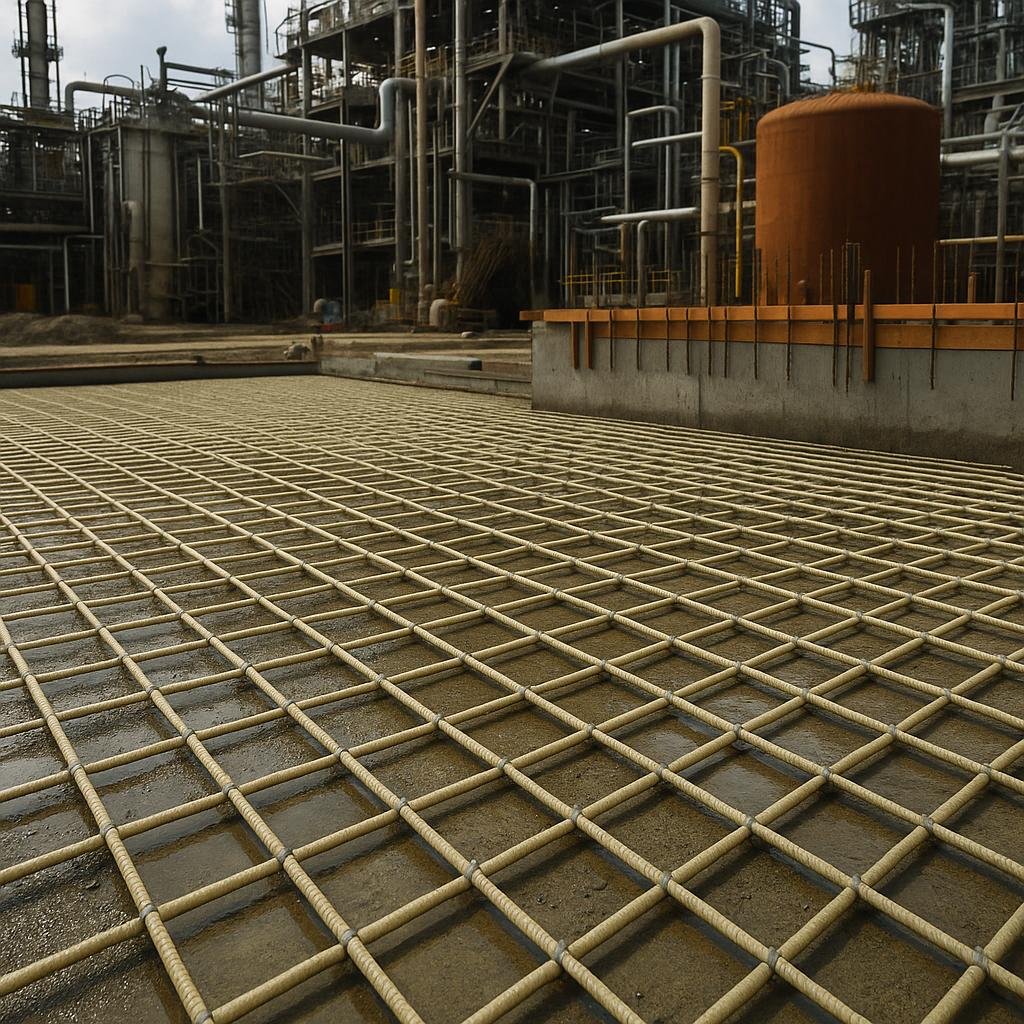
GFRP Rebar for Water Treatment Plants and Sewage Infrastructure — The Only Rebar That Survives
Water treatment plants and sewage infrastructure represent some of the most demanding environments for reinforced concrete structures.
They are permanently wet. They contain aggressive chemicals — chlorine, hydrogen sulphide, biological acids, ammonium compounds. And they are buried underground or in enclosed humid spaces.
For steel rebar inside these structures, it is a fight against time. GFRP does not fight time — it simply does not corrode.
Why Steel Fails in Water and Sewage Structures
1. Permanent moisture These structures are always in contact with water. Moisture penetrates microscopic cracks in concrete and reaches the steel — starting the corrosion cycle immediately.
2. Hydrogen sulphide (H₂S) Sewage generates H₂S gas — one of the most aggressive corrosion agents for steel. Even at low concentrations, it dramatically accelerates corrosion.
3. Chlorine and chloramines Water treatment uses chlorine for disinfection. Chlorides attack the passive layer on steel and initiate rapid pitting corrosion.
4. Biological acids Bacteria in sewage produce sulphuric acid (biogenic corrosion). This attacks both the concrete and the steel reinforcement inside.
5. Constant humidity Even areas not directly in contact with water face 95-100% relative humidity — more than enough to sustain continuous corrosion.
GFRP's Advantages in Water Infrastructure
GFRP is completely immune to: - Chloride-induced corrosion - Hydrogen sulphide attack - Biological acid corrosion - Moisture and permanent wetting - Alkali and mild acid attack
This is not a marginal improvement over steel. It is a complete elimination of the primary failure mechanism.
Applications in Water and Sewage Infrastructure
| Structure | GFRP Application |
|---|---|
| Aeration tanks | Wall and floor reinforcement |
| Clarifier tanks | Full structural reinforcement |
| Sludge holding tanks | Corrosion-critical zones |
| Pump houses | Floor slabs and underground walls |
| Chemical dosing areas | Containment walls and floors |
| Sewage lift stations | Wet well walls and base slabs |
| Effluent treatment plants | All reinforced concrete elements |
| Underground sewage networks | Pipe bedding slabs and manholes |
Real-World Impact
Municipal water treatment plants in India often undergo major structural repair within 15–20 years — not because of design failure, but because of steel corrosion in the wet zones.
Replacing or repairing reinforced concrete in a working treatment plant is operationally disruptive and extremely expensive. Water supply to the city may need to be reduced or rerouted.
GFRP-reinforced structures eliminate this problem. They serve the full design life — typically 50 years or more — without corrosion-related intervention.
Government and Municipal Projects
With India's push for improved water infrastructure under AMRUT, Jal Jeevan Mission, and Smart City programs — there is enormous scope for GFRP adoption in municipal water infrastructure.
RN Elements actively works with consultants and contractors on government water sector projects.
Conclusion
If you are designing or building water treatment plants, sewage structures, or any water-retaining infrastructure — specify GFRP rebar. The cost of not doing so is paid in repair bills and operational disruptions within 15 years.
👉 Contact RN Elements for water infrastructure supply →
📩 rnelementsllp@gmail.com | 📞 +91 9227990800
RN Elements — for creators who build a legacy.