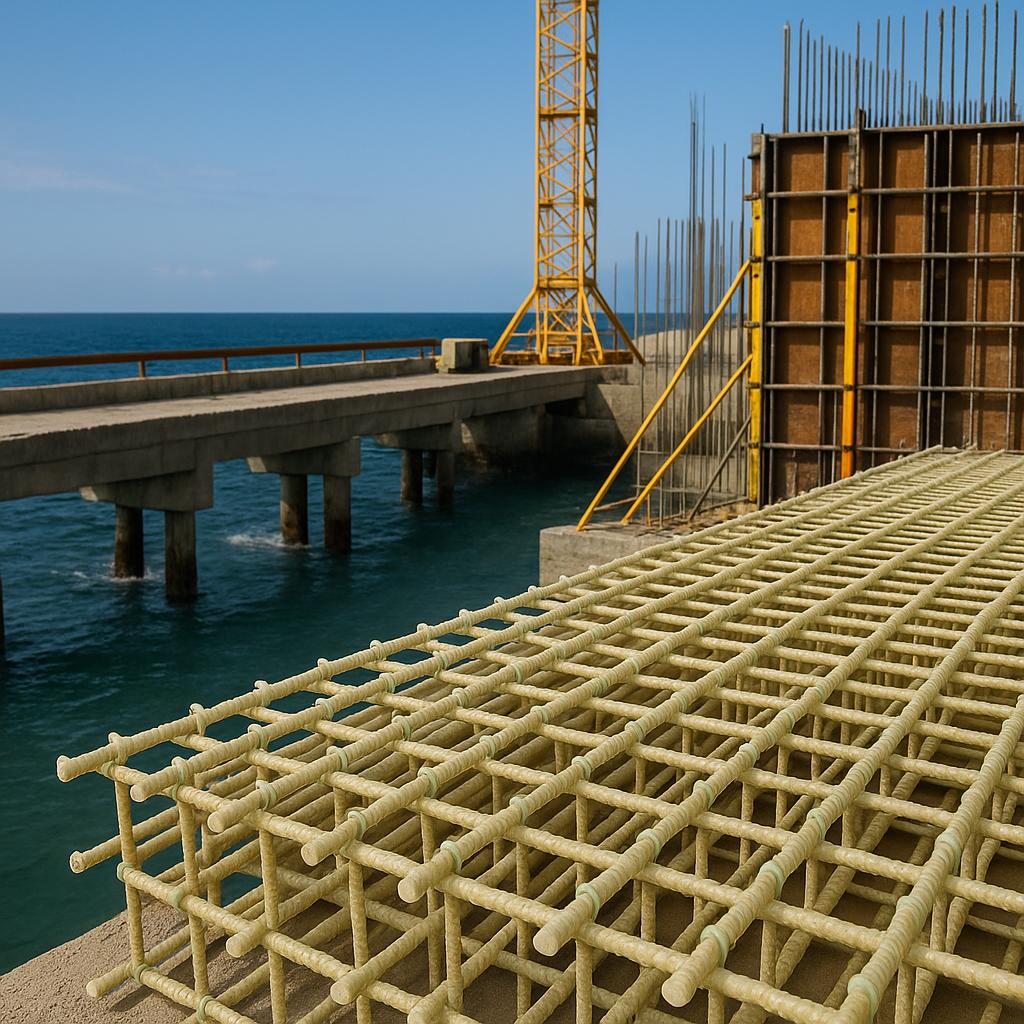
GFRP Rebar for Coastal Construction in India — The Only Rebar That Survives the Sea
India has over 7,500 km of coastline. From Mumbai to Chennai, Kochi to Vizag — millions of buildings, bridges, and structures are built in salt-rich, high-humidity coastal environments.
And every single one of them faces one silent enemy: corrosion.
🌊 What Happens to Steel Rebar Near the Sea?
Salt in the air and water is steel worst enemy. Here is what happens over time:
- Salt and moisture enter tiny cracks in concrete
- Steel rebar starts to rust from the inside
- Rust expands → concrete cracks and peels off
- Structure becomes unsafe — needs expensive repair or demolition
This process happens faster than you think — sometimes within 10–15 years in coastal zones.
1️⃣ GFRP Rebar — 100% Corrosion-Proof
GFRP (Glass Fiber Reinforced Polymer) is made from glass fiber and resin — not metal.
This means:
- Zero reaction with salt water or sea air
- No rust. No swelling. No cracking.
- Perfect for jetties, seawalls, coastal roads, bridges, and buildings near the sea
2️⃣ Used Worldwide in Marine Infrastructure
GFRP rebar is the global standard for marine and coastal construction:
- Port authorities in the USA and Europe specify GFRP for all new marine structures
- Coastal highway projects in Canada and UAE use GFRP exclusively
- India is now catching up — and RN Elements is leading this shift
3️⃣ Lighter, Faster, Cheaper to Build
Coastal construction is already tough — rough terrain, high humidity, difficult access.
GFRP makes it easier:
- 4–5× lighter than steel → easier to transport and handle on site
- Faster installation → lower labour cost
- No heavy machinery needed for small and mid-size jobs
4️⃣ Real Cost Saving for Coastal Projects
A coastal building reinforced with steel may need major repair work within 15–20 years — costing lakhs in concrete patching, painting, and structural work.
A building reinforced with GFRP rebar? Still standing strong after 50+ years. No repair needed.
The math is simple: GFRP saves money in the long run.
Which Projects Should Use GFRP in Coastal Areas?
- Seawalls and breakwaters
- Jetties and piers
- Coastal roads and bridges
- Beach resorts and hotels
- Ports and harbours
- Underground structures near the sea
Conclusion
If you are building anything within 50 km of the coast, GFRP rebar is not just a better choice — it is the only smart choice.
Do not let salt and rust destroy years of hard work and investment.
👉 Talk to our team for coastal project guidance →
RN Elements — for creators who build a legacy.